
The Camera as a Lens to the Invisible
How our photography mechanic evolved from simple screenshot capture into a core investigative tool.
“Sometimes the camera sees what you can’t.”
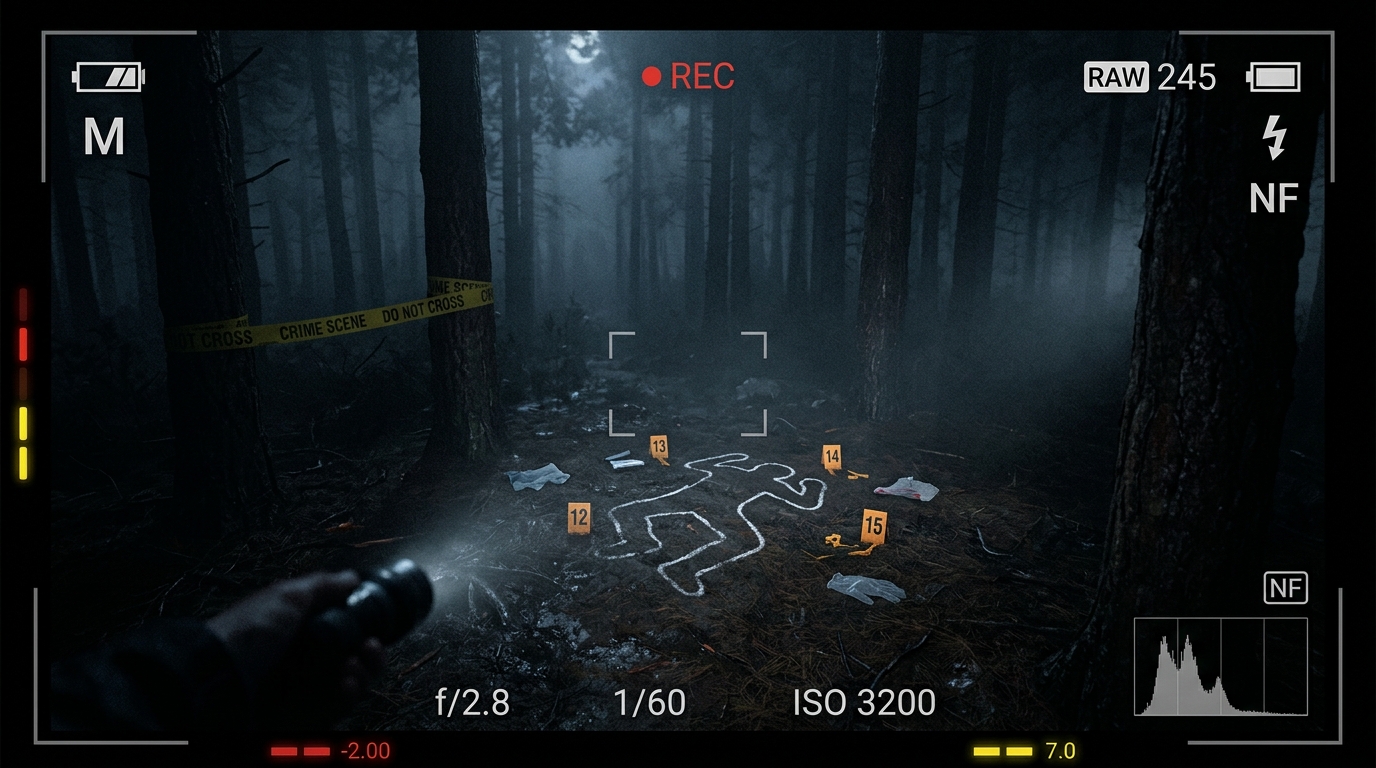
01 / Why Photography Matters in Horror
In most investigative horror games, the player simply presses a button to 'inspect' a glowing prompt. We wanted something tangible and tactile: raising a physical camera to your eye, adjusting zoom, framing the composition, and holding your breath for the shutter.
Looking through a viewfinder naturally narrows your peripheral vision, making the player profoundly vulnerable to approaching threats.
02 / Developing Film & Forensic Clues
When you photograph a crime scene or body in the forest, the photograph captures more than just pixels. Developed snapshots reveal faint ultraviolet reflections, spectral contours, and symbolic markers carved into tree bark that your character cannot see in real-time.
This turns photography into a two-stage puzzle: capturing the scene under immense fear, and studying the developed photograph in safety.
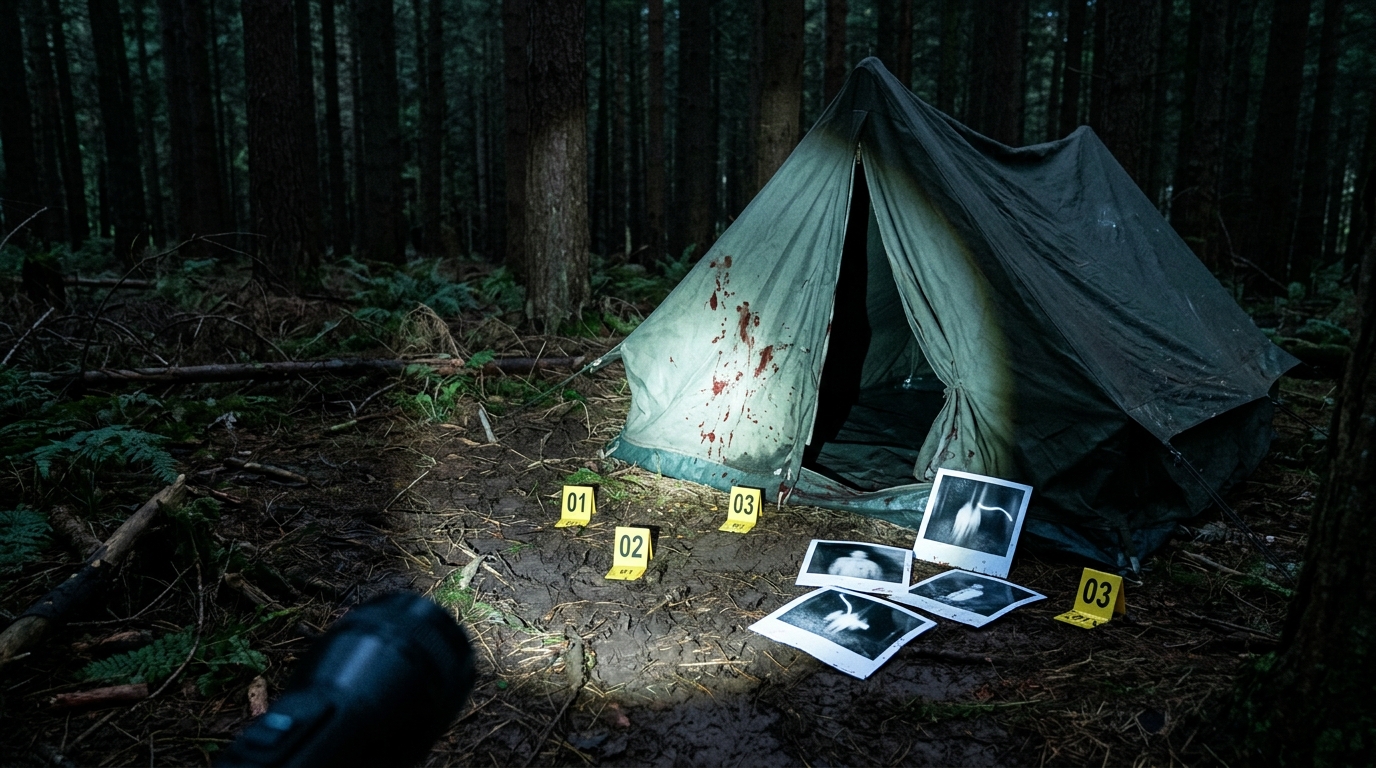
03 / Xenon Flash Risk vs. Reward
In pitch darkness, the camera's xenon flash can illuminate an entire clearing for a fraction of a second. But high-intensity flash blindingly reflects off mist and instantly alerts any entity stalking the perimeter.
Studio Takeaway
A camera is a psychological amplifier. When the player is forced to look closer at what frightens them most, the horror becomes personal.
Devlog 002: Forensic Storytelling in the Woods
Next Dispatch →Devlog 004: Fog, Light, and Falling Silent
Closed Alpha Testing
Want to test these systems early?
Join the priority waitlist to receive closed Steam playtest keys and private build notifications.